My mid-forties loom; my mid-twenties are galloping away.
It’s just…it was one thing, in my thirties, contemplating that twenty years ago I was a middle-schooler. It’s another thing to ponder that I was in college twenty years ago.
This seems more monumental than it probably is.
Things I Would Tell Myself In My Twenties
There’s nothing like aging to encourage reminiscing. Lived experience is bittersweet: I’m grateful for the experience/knowledge, but their gain paints past actions, thoughts, and behaviors with a wash of mortification.
It gives me the ick, as the kids say. (See? I’m not middle-aged!)
In an exasperated and kind spirit, if I could go back to my twenties, this is what I would tell myself.
Appearance/Health
Let’s start at the shallow end of the observational pool, shall we?
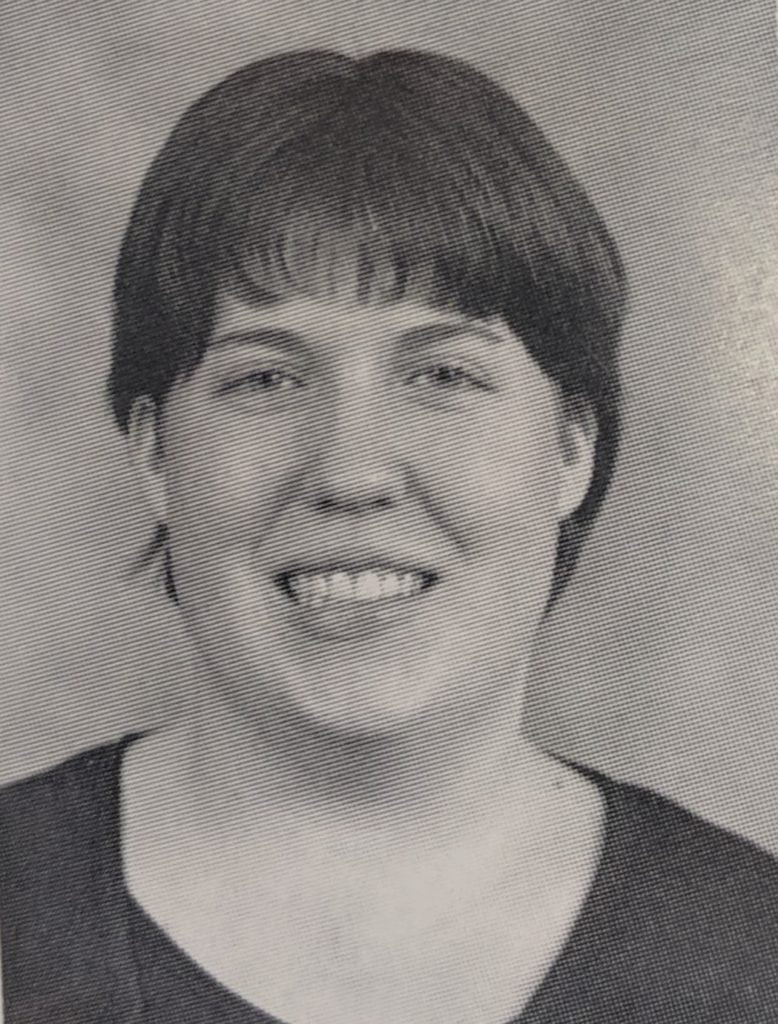
Your Haircut Is Terrible
Honey, you have a looong face, and a short style doesn’t do it any favors.
For the love of God, grow it out (and thank you so much for never bleaching it, heat-drying it, etc).
The idea that women should cut their hair in their 30s (definitely by age 40) was outmoded at your first exposure to it. Don’t listen; it’ll normalize the idea of policing women about weird stuff.
There’s no need to wait until you “get skinny” (you literally said that to those who suggested it). If anything, hair growth will de-puff your face.

Fundamental Attribution Error Is Your Friend
Speaking of getting skinny, go ahead and get on that, yeah?
Listen, I’m so grateful towards Naomi Wolf, the nascent body positivity movement (before it got weird), and Fashion Bug Plus. They helped to counteract the pervasive “heroin-chic” marketing aesthetic and mass media body shaming of my young adulthood.
But.
This is a terrible truth, and I’m so sorry: accepting, even cooperating with, societal beauty standards makes life easier. Doors have more give, circumstances more sanction; tests and suspicions are less easily allayed.
I’m talking about being purposefully image-conscious, not sliding into vainglory (it’s a slippery slope).
So, uh, stop being morbidly obese and style your hair more. Looking conventionally attractive is a uniform/disguise in and of itself.

On Love
I could have avoided more quarterlife travails by adopting these mantras:
Kick Older Adults Out of the Dating Pool
They do not think you’re cool. They do not find you irresistible or mature for your age.
What does Olivia Rodrigo (you don’t know her yet, unfortunately) say? “Went for me and not her/cuz girls your age know better.”
It’s like that, they’re all losers; run.
Unreciprocated Love Isn’t As Cool As You Think It Is
Baby girl. You’re only drawn to these dynamics because you’ve internalized the idea that you are hard to love or undeserving of total regard.
It’s not poetic. Nor is it evidence of a pure heart or a refined sensibility.
It’s avoidant attachment.

Professional Musings
I haven’t had a “real job” since 2016, and that distance gives impersonal insight into my young “career life.”
Co-Workers Aren’t Necessarily Friends
Hey, if they turn out to be, great! Just don’t assume that they are.
The idea that proximity equals friendship is a construct of childhood. It makes sense, as our first social groups are populated by neighbors and school mates. “Are we the same age and see each other regularly? Then we’re friends,” says eight-year-olds everywhere.
But that’s not how adulthood works. People need to be sorted more discriminately, not just due to…object permanence.
Think of access to you in tiers, organized by association type: acquaintanceship vs. friendship, alliance vs. bond, hook-up vs. lover, co-worker vs. colleague (hint: very few of these relationships involve either party being a confidante).
How You Do Anything Is How You Do Everything
Another childhood fallacy is thinking that as long as the end results look effortful to others, it doesn’t matter if they were actually half-assed.
This will catch up to you.
It’s small potatoes when teachers think it took you days to complete that book report when you know it took half an hour. Precociousness and neat handwriting only go so far in the real world.
What you need is passion, thoroughness, purpose, and, frankly, a more developed work ethic.

Regarding Others
There is no escape from society, no matter how you numb or distract yourself. As a human, you’ll always either be preoccupied with their perception or troubled by their absence, and that awareness often brings pain.
It’s fine, just remember to:
Pay Attention
People are what they repeatedly do, PERIOD. No matter who they are, or who they are to you.
What you see people repeatedly do to others, or to themselves, they will do to you, regardless of how charming, attractive, or funny you are. You cannot Manic Pixie Dream Girl your way to their behavioral change.
Reach Out
It’s called self-isolation, and you should stop that. Call your family and friends.
Sure, inertia and fear of that specific social awkwardness (with friends) keep you back, but it’s more of a self-destructive thing than anything else.

Regarding Yourself
It can take decades of distance to examine oneself properly (if at all). But I wish you knew these truths sooner.
You Are Not The Exception
At this point, you know about the heuristic of exceptionalism…but you think you’re an exception to it.
*FACE PALM*
No, princess. You are not the exception to the rule regarding the heuristic of exceptionalism.
Life will be easier (and more sensible) when you accept that statistics are statistics for a reason.
Here’s a mild example: studies are just starting to show how bad it is to look at your phone before bed. You’re going to read that and basically think, “That doesn’t apply to me! I sleep fine and am the exception to this ‘rule,’ I can look at my phone whenever I want!”
When you should do is look into that more deeply, go over the numbers, and accept your averageness, in the sense that, “Ok, do I have photoreceptors in my eyes? Yes. Then this applies to me. I may sleep well now, but I may not later; it’ll be good to put this in practice now.”
Now apply that principle liberally, all over your life.
Except When You Are
Alright. With that being said, let’s acknowledge a place where you often are the exception to the rule: you’re right a lot for being so young.
Not always, dear. A lot.
Remember what your college roommate said: “Megan’s a great person to follow…most of the time. 97.5% of the time she’s right. But that 3.25% she isn’t? It would never ever ever ever cross her mind that she’s wrong.”
Your 30s will teach you to better straddle that line, but hold on to that conviction of your own righteousness, ok? You do know things.
You read more than…anyone, in great, heaving gulps. And you remember it all.
Your pattern recognition skills are insane, you think incredibly quickly, and you register micro-expressions without knowing what’s happening (that’s why knowledge comes to you in “flashes” and people are always exclaiming “how did you figure that out?”).
You’re a thought leader now, though clumsy. You’ll own it in your 40s. That will make others uncomfortable; they’ll push back in ways you’ll find bizarre, then grow resigned towards and cynical about.
Without a foundation of intellectual confidence and strength, you’ll falter. And you shouldn’t. What you have to teach is important.

And Most Importantly
If I only had time to to tell myself one thing, it would be this:
Being a “good adult” (aka: having an active inner life, fulfilling relationships, sense of purpose, metacognition, perspective, emotional regulation, etc) is more skill than trait:
These conditions aren’t “grown into.” There’s no waking up one day and being all, “I’ve reached the magical age and stage of adulthood where these abilities are a given!” They don’t just happen.
They are skills, and therefore, must be learned (and researched, studied, honed). They must be practiced, lest they atrophy.
In other words, it’s work.
Your life’s work.

Want More?
Check out more coming-of-age musing here:
Happy birthday (to me)!
Love,