Twenty years ago, 80% of high schoolers had driver’s licenses. Today, that figure is 63%.
When I was growing up, getting one’s driver’s license was such a big deal. We were prepping at 15, with the driver’s ed, the test-taking, and the graduation from permit to license (furious about the just-passed law that disallowed driving without an adult for the first six months of licensure).
But that’s no longer the timeline or the process of today’s youth and their vehicle. Let’s explore the lore; I’ll wax poetic about teenage car culture and driving as a rite of passage.
Getting Behind The Wheel
In the 80s and 90s, more kids “drove.” Like, little kids. Partly, it was my location: small-town, extremely rural Indiana. But it was also because there was more…casualness where cars were concerned.
Remember when Britney Spears got in trouble for driving with her baby in her lap and she said, “We’re just country; people do that all the time back home.” I, for one, nodded.
Exactly! I’d seen tiny kids rolling down the road in a combine on their grandpa’s lap, hands at 10 and 2 on the serving platter-sized wheel. Or steering mowers in circles while everybody laughed. Or flying past me on go-carts.
Bigger kids would be asked to back up the truck real quick, or throw it in neutral, or stand right there and yell if they get too close to the building.
A Matter of Height, Not Legality
Seeing over the wheel meant it was time to learn to drive. At first, I said no. I was scared! Also, wasn’t that illegal?? But no wasn’t really an option.
Grandma explained that we’d be on “straight shot” country roads, with little traffic. No one would see us, let alone one of the two cops in the township. (Besides, they would nod, amused and knowing, “there goes Joanne teaching her granddaughter to drive, nothing to see here.”)
And that I needed to learn an important, vital, and life-saving skill. That, if “something ever happened,” I would be able to back a vehicle off an accidentally crushed person, leave an unsafe situation, successfully carjack someone, etc.
Her insistence was personal. My great-grandfather had died of a heart attack, with a toddler (my father) as witness. If that ever happened to me and my grandpa, I was going to be able to drive us to safety, by God.
Country Roads, Take Me Home
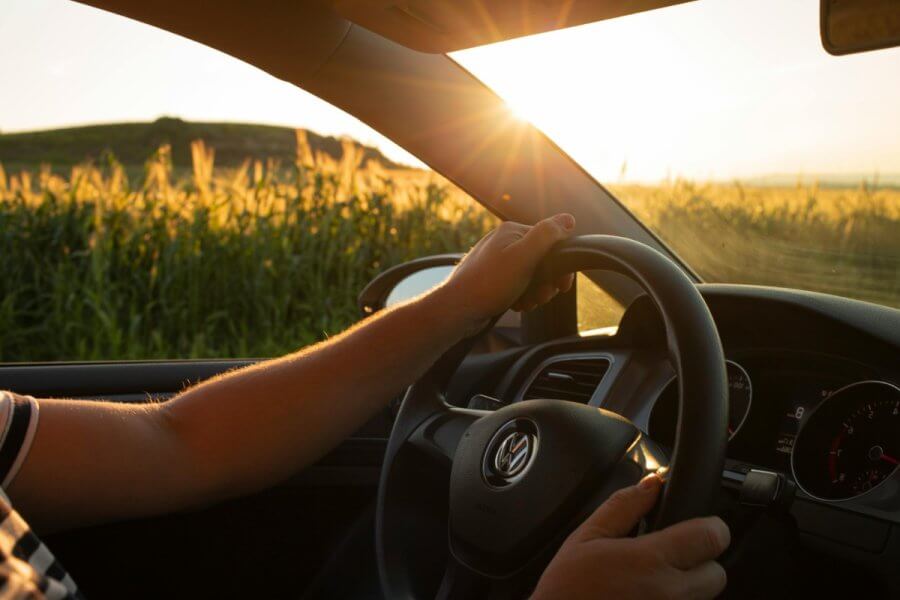
On Wednesdays, we wore seatbelts. That was driving lesson day, when I was picked up from elementary school to go to my dad’s. We’d go a dozen or so miles down Highway 231, then turn down a side road. (Remember when they were called “rural routes?”)
These first driving memories are of billowing cornfields and high sun, sky in every direction. It was beautiful, in a specifically Midwestern way of meshed silos brimming with bright yellow kernels, respectably dilapidated farmhouses and the gleaming, state-of-the-art barns beside them, flowered plants circling mailboxes.
I’d pick my favorite tape from its tackle box looking tote. With the windows open, warm air rolled in (faintly laced with the scent of manure) and strains of “Gambling Man” floated out.
Grandma taught me specific things about these roads:
- The importance of staying centered on your side (especially on hills, and especially in daylight; at night, you could at least see headlights)
- Knowing what type of vehicle caused what type of dust cloud (giving clues as to how much to slow down, get over, etc.)
- How to “scan” one’s eyes from ditch to ditch (in anticipation of darting animals)
- The speed to inch forward at intersections blocked by overgrown vegetation, loose bulls, or downed structures
- The niceties of passing large vehicles in tight spaces (with a finger wave/salute), and
- To never tailgate (you never know when something could go flying off a truck, someone else having to brake suddenly, etc.)
I’m adjacent (rather than smack dab) to these pastoral scenes, and these lessons continue to be useful. I can tell when other drivers haven’t had them.
Red Light, Green Light
In that first half-year, I took hills too slowly and turns too wide, accelerated too timidly and yet never came to a complete stop.
Grandma said that I’d laugh about being scared; that the more I drove, the easier it’d get. She was right. Driving her car all over the back roads and farm lots of Putnam County became no big deal.
We began darting in and out of micro-towns along the way, to experience 4-way stops with flashing lights (“Don’t go until the car rocks back, Megan.”) and sharing the road with regular-sized cars (“If you look like you belong, they’ll think you belong.”).
By fourteen, we were old hats. Reckless ones, even. We hadn’t been on the interstate, but we’d considered it. I’d been on all the local highways, through most of the towns, and over every rickety bridge.
She wouldn’t let me drive out-of-state, on vacation, though. (We didn’t know the cops there.) But I was about to get my permit, and all that was going to change.
Fifteen and Nearly Legal: The Driver’s Permit
Grandma was itching to get me on I-465, to work on merging and entering/exiting it (“smoothly, none of that jerky stuff; turn signal, eye contact, nod, move”). I teared up the first few times. The angst was worth it, as our destination was Barnes & Noble.
In a year, these trips were something else to shrug at. The semis no longer scared me. I understand the tricky interchanges, and I knew that Washington Street and Highway 40 were the same road.
Both my mother and grandmother sought out novel (urban) car situations: having me traverse parking garages, pay tolls, and endure traffic jams.
Conversations centered around skills that I barely touch now. Mainly, how to navigate. I remember the horror of re-folding AAA maps, noting direction by odd or even highway numbers, and the need for quick reading in pop-up construction.
Sixteen and Completely Legal
I didn’t get my own car at sixteen. But my boyfriend had one, which was nearly the same. His car made noise, and he drove it fast.
Most of my peers owned their own cars, with their own vocabulary, seemingly coming with the warranty. We were always “piling into” each other’s machine (I had one by eighteen), to “go on drives,” or “run up to” the gas station.
We could smoke cigarettes in our cars! Play the music as loud as we dared! Throw fast food trash out the windows (sorry)! Do doughnuts and fly over hills! Cars were these big, private boxes, where, if you got far enough out of town, you could do…anything.
(Get Your Kicks On) Route 66
But I wasn’t (just) in Indiana anymore. My grandparents had been taking me on summer vacations for years, and they were done shouldering the driving.
The summer I got my license, we headed out west. It was a two week trip and the most ambitious yet: from Indiana to northern California and back, hitting as many important spots as we could: the Grand Canyon and the Mojave Desert, slot machines and redwoods, the corn palace and the tabernacle.
We rented a car. Not just any car, a convertible (a Ford, but still). I was in charge of filling out the paperwork, up the tank, and out the itinerary. The control was heady, empowering.
The experiences gained and memories formed on this trip were priceless. I remember Grandma and Grandpa, asleep (in the passenger and backseat, respectively), driving down a lone road in Nevada or Montana, just me and the scenery.
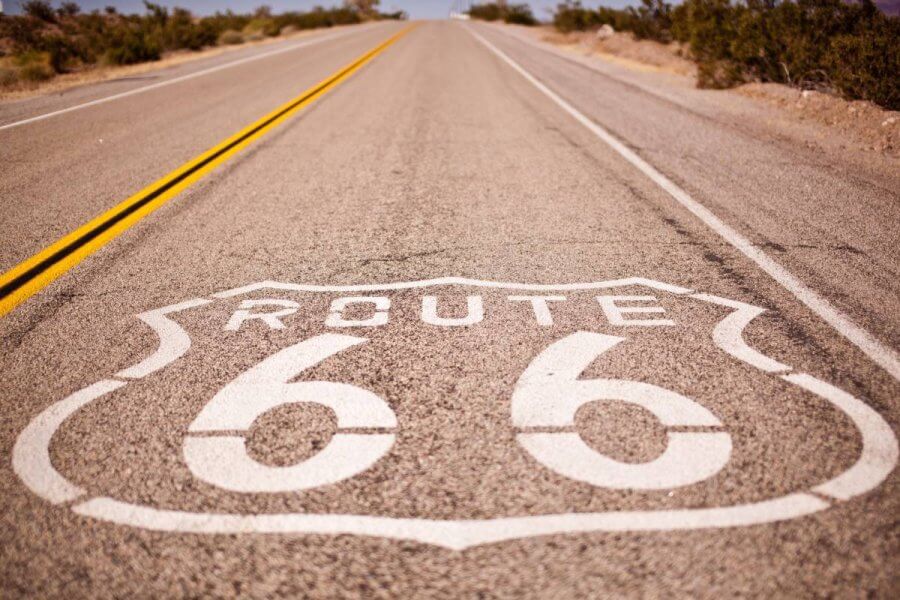
If I saw something I wanted to see, I stopped. That’s how we ended up at a “prairie dog museum” (just some house, with an infestation in their backyard that they charged us to stare at) or any abandoned building that looked cool, and why I was able to read every historical sign on Route 66.
I Can’t Remember What I Named My First Car
I’ve had a car since my senior year of high school. The first couple was Ford Tauruses (Tauri?). I wish I remembered more about them.
The last one was silver. The first one had way too many bumper stickers (a mistake never to be repeated). I expressed my personality through clever air fresheners. There were ashtrays in both of them, front seat and back.
The first time totaling it involved a suicidal deer (I said what I said, that deer hit me). I either didn’t have a cellphone or left it somewhere, and I had to pull over and walk up this dead, dark driveway to this spooky house with a poor little scared old lady in it who had to call the sheriff for us.
Since I was associated with accounts in good standing, it was fixed within the week.
Teenage Car “Ownership”
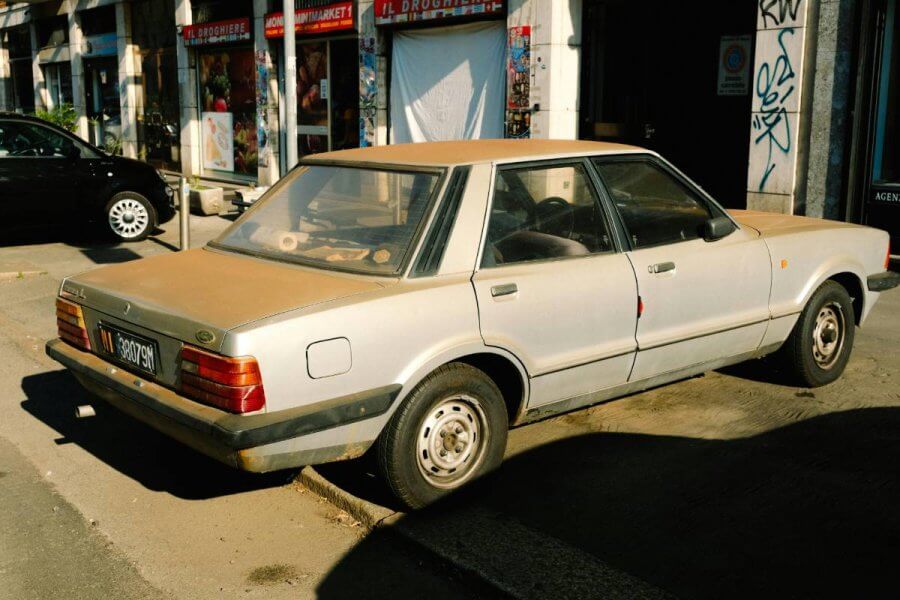
Sure, those cars were mine, but my grandparents bought them. I paid insurance payments (not a huge deal, cost-wise) and filled the tank, etc.
I worked at Burger King, but my mom, both sets of grandparents, and other family members provided pocket money that padded those expenses, or would swoop in the case of vehicular catastrophe.
Most of my peers were in similar situations, perhaps not as comfy as mine: they might have bought themselves a $500 clunker that wouldn’t be replaced, but their families contributed to gas, oil changes, and small repairs.
Those small repairs were simpler on older cars, and more people knew how or were able to do “car stuff” when I was a teenager. Cash-strapped families had some uncle who did the best work for cheap or free. I can’t remember all the random driveways where my car got an oil change by some random dude. It was never subpar work, either.
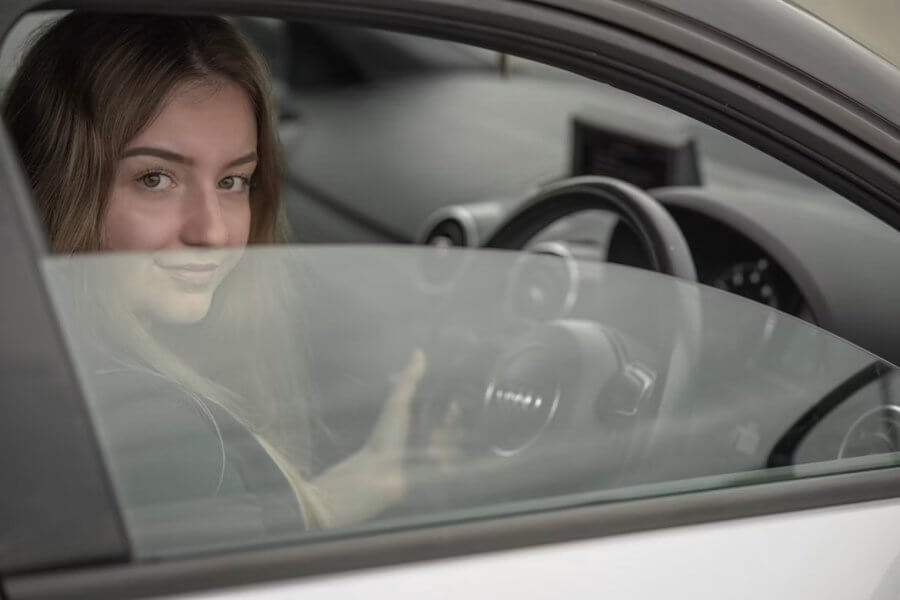
I understand that this was privilege even in 2001, as I said before, most, not all, of the teenager I knew “owned” their own vehicles, too.
Is that the case now?
Do people even sell “clunkers” anymore? Can teens today get safe, used cars for less than $1000? If a teenager were to get their hands on one and total it, would the average American family be able to replace or repair it? Could today’s teenager fill their tanks on fast food pay and drive all over the county?
I don’t have the numbers, but I’m leaning towards no.
And—according to an informal Facebook poll—others feel the same. Lots of Gen Xers replied to my query with stories about cars that were less expensive and easier to work on, and a time when working on, collecting, accessorizing, etc., cars were hobbies. (I’d completely forgotten about tuner culture!)
Think Of The Children
Now, if American cities were more walkable and replete with public transit systems, I wouldn’t feel as bad for today’s youth. Navigating those systems is an important skill with which everyone should be familiar.
Or, if kids were riding around in different, futuristic vehicles, that would be cool, too.
But there doesn’t seem to be alternatives to a disappearing car culture, most kids just…don’t drive.
And that makes me sad for them. I want them to have the feelings of mastery and power, freedom, and independence. I understand that there are other ways to find that than driving forty-five minutes to make out in a cornfield, but are they as seminal?
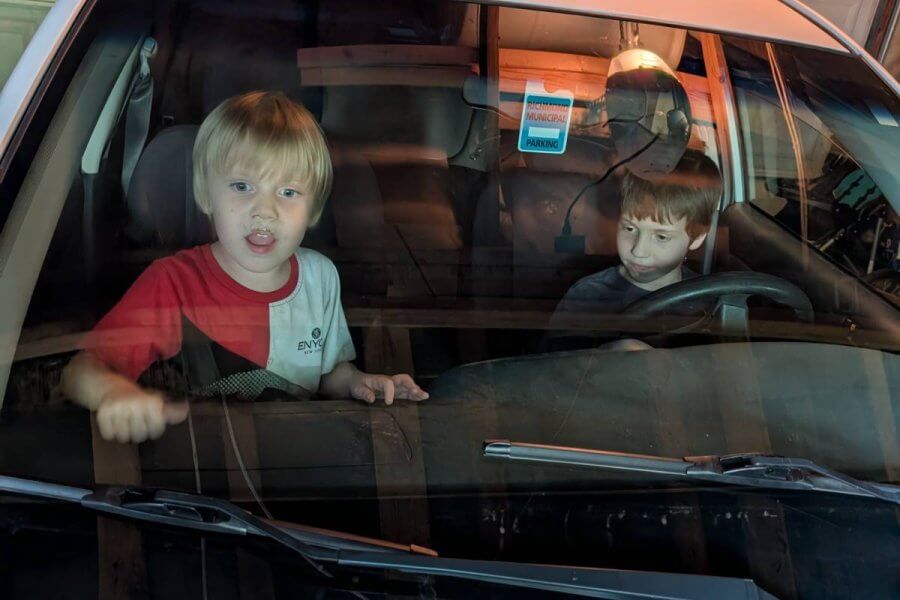
Buy Your 8-Year-Old A Car
No, no, I’m kidding. I’ve got four kids, man, and I don’t know if I want to buy any of them a car. In this economy or ever.
Nor can I imagine letting any of them drive at ten. Or at twelve.
We’ll find other ways to teach independence, starting with chore lists that work up to employment and saving up for their own vehicles. That seems an important part of American teenagehood. (But surely they would have to share? We don’t have the space for every family member to have a car.)
Conclusion
I love driving, and continue to see it as an activity and not just a verb. I no longer take hour-long country drives, but I still want to.
I’m not sure if my children will associate cars with anything more than getting from extracurriculars to home. I doubt they’ll struggle to find the console air freshener that will best fit their vibe.
And I know that, as teens, they’ll drift away from me, no matter what. That’s the way of things. I just wish to keep the distance physical, cruising the streets of a few towns over, not on their devices, sitting beside me, yet exposed to seemingly worse dangers.
Want More?
Check out more rant-y, opinion pieces here:
- Cutting People out of Your Life or Nipping Toxicity in the Bud
- Myka Stauffer, Rachel Hollis, and Curated Imperfection
Happy vroom vroom!
Love,